2026-08-14 · Robert Hale
How Houston Rainfall Affects Flat Roof Drainage
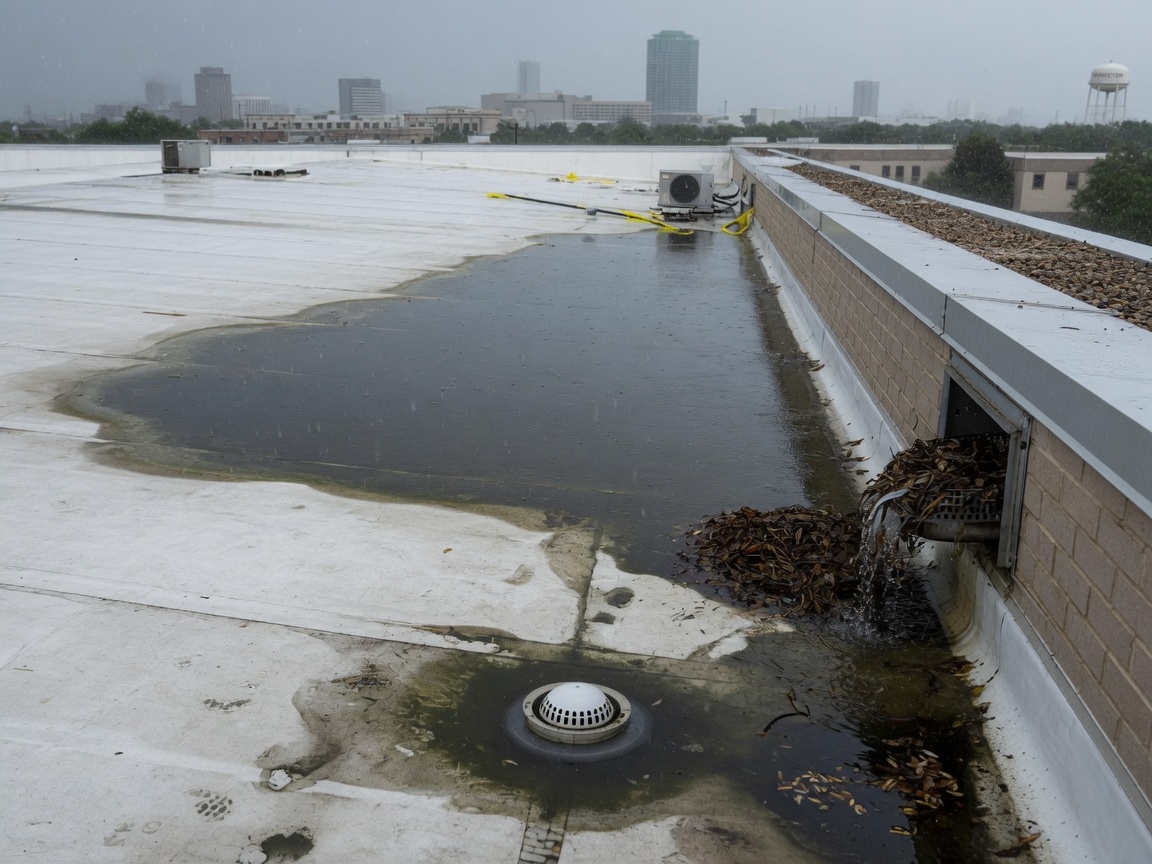
Houston's subtropical climate with hot humid summers and mild winters delivers repeated heavy rain events that quickly overwhelm flat roofs lacking adequate drainage. When water sits for more than 48 hours, it increases leak risk around penetrations and seams in areas such as Montrose, River Oaks, Heights, Midtown, and Downtown. Effective drainage depends on consistent slope toward scuppers and drains, plus regular clearing of debris that collects during storms.
How Frequent Rainfall Creates Ponding Conditions
Houston receives multiple rain events each month that can drop several inches in a single afternoon. Flat roofs in Harris County must move this water off the surface within 48 hours to avoid membrane stress and accelerated wear. Without positive slope, low spots form where water collects near HVAC units or skylights common on commercial buildings. Owners in Midtown and Downtown often notice standing water after storms because nearby high-rises alter wind patterns and increase debris load. Checking slope during mild winter months reveals issues before summer humidity returns and intensifies evaporation cycles that leave behind residue.
Drainage Components Most Affected by Local Storms
Scuppers and internal drains clog fastest during Houston's downpours when leaves from nearby parks and construction dust combine with runoff. Modified bitumen and EPDM systems around Minute Maid Park or the Museum of Fine Arts show repeated failures at these points when outlets are undersized. TPO roofs in the Heights benefit from wider perimeter drains, yet still require seasonal clearing to maintain flow. Commercial flat roof repair crews routinely find that one blocked scupper can back up water across an entire 2,000-square-foot section within an hour of steady rain.
Inspection Steps After Heavy Rain Events
Walk the roof within 24 hours of a storm while water is still present to mark low spots with chalk. Measure depth at multiple points and note any areas exceeding one-quarter inch after 48 hours. Document membrane condition around drains and check for algae growth that signals chronic moisture. Link these findings to the next maintenance cycle rather than waiting for visible leaks. Readers can review Flat Roof Repair Cost Factors in Houston Texas to understand how early drainage fixes compare to full replacements.
When to Schedule Professional Drainage Assessment
Contact a local crew offering 24/7 Emergency Service if water remains after two days or if interior stains appear near roof edges. Technicians serving River Oaks and Montrose carry portable pumps and slope lasers to confirm drainage paths on the spot. Schedule routine visits between 7am and 7pm Monday through Saturday to align with business hours while avoiding peak summer heat. For properties with multiple buildings, a single assessment often identifies shared drainage patterns that affect the entire portfolio.
Connecting Drainage Issues to Leak Prevention
Ponding water softens seams on modified bitumen roofs and lifts TPO welds over time, creating entry points for the next rain. Early correction through flat roof leak repair stops minor drainage problems from becoming interior damage near the Houston Zoo or Space Center Houston. Commercial properties benefit from pairing drainage upgrades with commercial flat roof repair that includes tapered insulation to restore slope. Consistent attention to these details extends membrane life in Houston's variable weather without requiring full replacement.