2026-08-14 · Robert Hale
Inspecting Flat Roofs for Summer Heat Damage in Houston
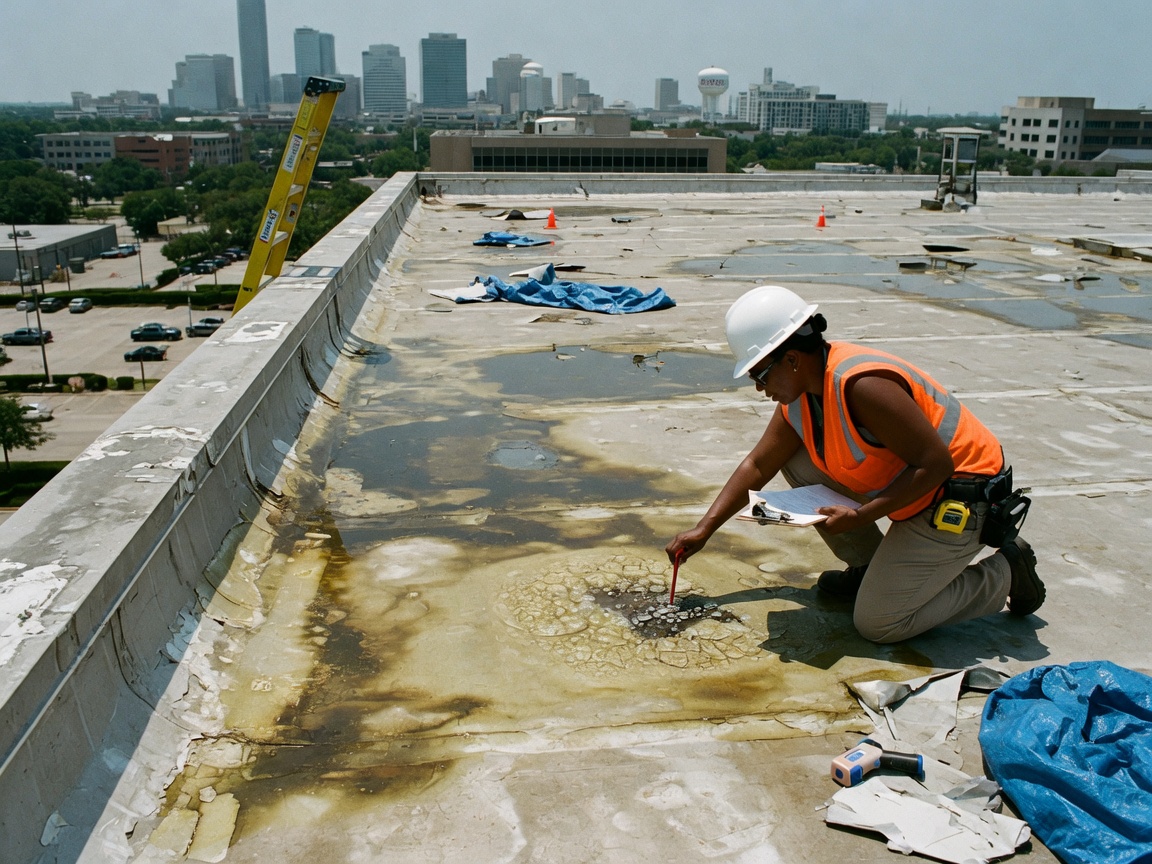
Houston's summer heat often pushes flat roof surfaces above 140°F during the day, causing membrane expansion, blistering, and eventual cracking within one to three seasons. Owners in Montrose, River Oaks, and Midtown should schedule inspections after the first stretch of temperatures above 95°F to spot these changes before water intrusion begins.
Understanding Houston's Summer Heat on Flat Roofs
Houston's subtropical climate delivers hot humid summers with daytime highs frequently reaching 95–100°F and nighttime lows rarely dropping below 75°F. This constant heat load expands and contracts flat roof membranes daily, breaking down adhesives and creating weak spots faster than in milder regions. In Harris County, commercial buildings in Downtown and the Heights often show accelerated aging on modified bitumen and EPDM systems after just two or three summers. The added humidity traps moisture under the surface, turning small blisters into larger failures. Inspectors look for these patterns especially on roofs near the Houston Zoo or Museum of Fine Arts where reflective heat from surrounding pavement intensifies the effect. Early detection prevents the need for full replacement by addressing issues while they remain localized.
Key Indicators of Heat Damage to Inspect
Walk the roof at midday when surfaces are hottest and look for raised blisters 4–12 inches across that feel soft underfoot. Check for alligator cracking where the top layer splits into small squares, allowing UV rays to reach underlying felt. Measure membrane shrinkage by noting gaps wider than 1/4 inch at flashings or parapet walls. In commercial flat roof repair situations, examine seams on TPO or EPDM for separation caused by repeated expansion. Pay attention to ponding water that remains 48 hours after rain, as heat damage often reduces drainage slope. These signs appear first around HVAC units and skylights where concentrated heat builds up.
Step-by-Step Inspection Process
Begin at the lowest point and work toward drains, photographing every anomaly with a timestamp. Use a moisture meter to scan suspect areas for readings above 20 percent, indicating trapped water. Probe seams gently with a flat tool to test adhesion without tearing the surface. Document any soft spots by marking their location and size on a roof diagram. Compare current conditions against photos from the previous spring to quantify new damage. For buildings in Midtown or Downtown, factor in vibration from nearby traffic that can worsen heat-induced cracks. This methodical approach reveals whether damage stays cosmetic or requires immediate intervention through services such as flat roof leak repair.
Addressing Damage and Long-Term Protection
Small blisters under 6 inches can often be repaired by cutting, drying, and patching with compatible material rated for Houston heat. Larger areas benefit from roof coating restoration using elastomeric products that reflect up to 80 percent of solar radiation. When shrinkage affects more than 15 percent of seams, owners should consider targeted replacement sections rather than waiting for leaks. Linking inspections to rainfall patterns helps, as shown in related guidance on how Houston rainfall affects flat roof drainage. Regular coating applications every 8–12 years extend membrane life in the local climate while keeping interior spaces cooler.
When Professional Help Is Essential
If moisture meter readings exceed 30 percent or cracks reach the substrate, contact a local crew for evaluation. Commercial properties in River Oaks or near Minute Maid Park often need specialized equipment for safe access and accurate assessment. Technicians available Mon–Sat 7am–7pm plus 24/7 emergency service can respond quickly when sudden heat-related failures occur. Review cost factors in advance through resources like flat roof repair cost factors in Houston Texas to plan budgets realistically. Consistent summer inspections protect the roof investment and prevent interior damage during the next humid season.